
Efficient and predictable internal logistics flows
Contents
What does the automation of internal logistics mean?
Internal logistics automation refers to the management and transport of materials within a factory or warehouse without constant manual intervention.
- supplying production lines
- transfer between zones
- receipt of finished products
- internal warehouse transport
Manual transport vs. automated transport
Manual handling is common in most factories and warehouses. It is easy to implement, but it introduces variability into the workflow. It depends on the availability of operators, priorities that change over time, and coordination between teams. In practice, this leads to delays, downtime, and a lack of predictability.
Automated transport is changing this model. The movement of materials becomes continuous, predictable, and independent of direct human intervention. The systems operate according to clear rules and can be integrated with existing processes.
It’s not just about automation, but about stabilizing the flow and eliminating variations that affect overall efficiency.
Intralogistics technologies: AMRs and automated systems
There are two approaches to automating internal logistics, but they do not offer the same level of flexibility. In practice, AMR-based solutions can be implemented quickly, are easy to use, and can be adapted without disrupting workflow.
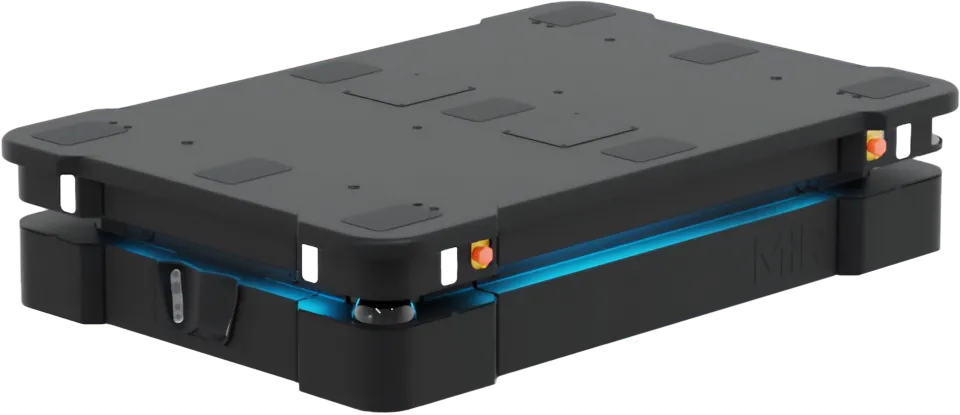
AMRs navigate independently in space using sensors and digital maps. They do not require fixed routes and can avoid obstacles in real time.
They are suitable for:
- dynamic environments
- frequently changing flows
- quick implementations without major changes to the infrastructure
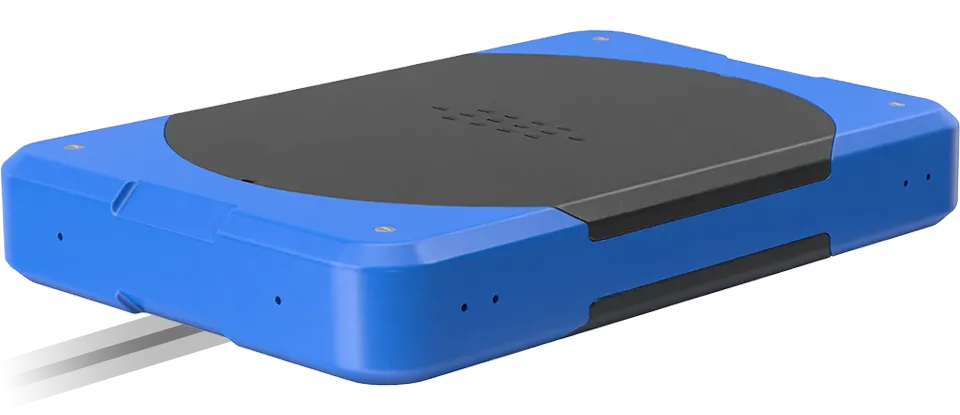
Fixed automated systems (conveyors, AGVs, dedicated lines) operate along defined routes and are optimized for stable processes.
They are used for:
- constant volumes
- recurring flows
- deployments with dedicated infrastructure and fixed routes
AGVs (Automated Guided Vehicles) are designed for fixed configurations right from the implementation phase. AMRs (Autonomous Mobile Robots) use state-of-the-art sensors and intelligent algorithms to navigate autonomously and adapt to the work environment in real time.
Logistics automation applications
Supplying production lines
Transfer between zones
Pickup of finished products
Transporting products to packaging or shipping areas.
Internal warehouse transport
Safety of autonomous logistics systems
Safety is a critical factor in the use of mobile robots in industrial environments. AMRs are equipped with sensors, scanners, and detection systems that enable them to identify obstacles and react in real time. They can slow down, stop, or change course to avoid collisions.
Integration of mobile robots
A major advantage of mobile robots is that they can be integrated relatively easily into existing processes without major modifications. Implementation does not require fixed infrastructure, and paths can be defined and adjusted via software. This enables rapid commissioning and subsequent adaptation without complex interventions.
Performance depends on the clarity of the workflows, how the pickup and delivery points are defined, and how the system interacts with other systems.
MiR software platforms offer options for fleet management, route planning and optimization, as well as integration with external systems such as ERP or WMS. The robots can be controlled centrally, receive tasks in real time, and be easily adapted to changes in the logistics workflow without complex system interventions.
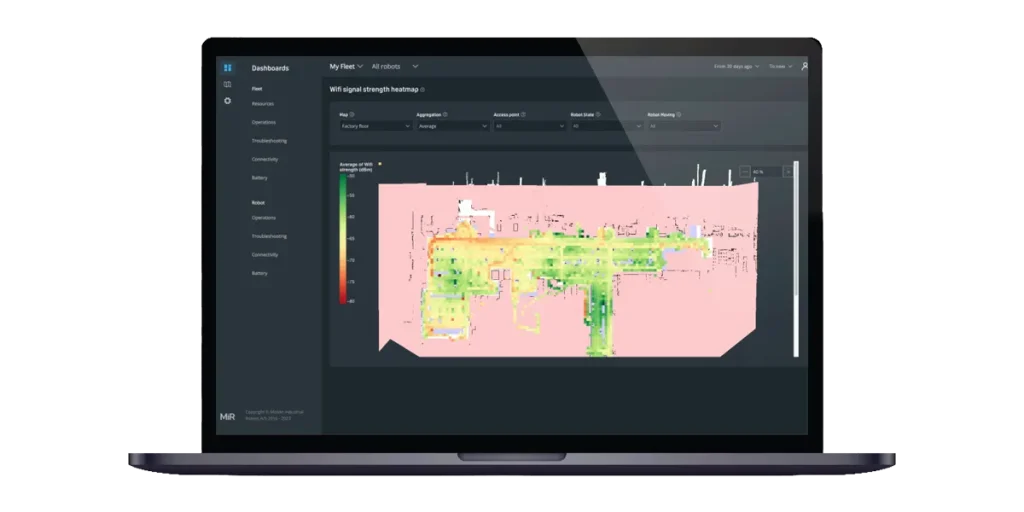
MiR Fleet is a management platform that enables centralized control of the entire robot fleet from a single point via an intuitive web interface. The system automatically coordinates available robots, prioritizes tasks, and assigns them based on real-time location and availability. Regardless of the robots’ configuration or the accessories used, the platform ensures a consistent logistics flow, reduces downtime, and allows for easy scaling of the system as the workload increases.
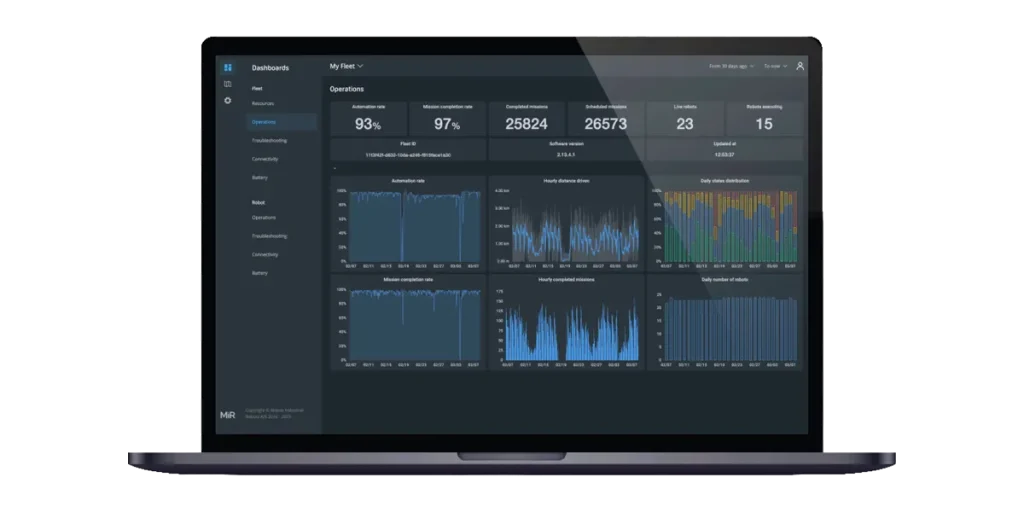
MiR Insights is a cloud-based software platform that provides complete visibility into the performance of the robot fleet. Through dashboards, heatmap analyses, and performance metrics, the system enables the identification of bottlenecks, the optimization of workflows, and the improvement of robot utilization. Advanced analytics and access to real-time data facilitate rapid diagnostics and decision-making, directly contributing to increased efficiency and maximizing return on investment.
The Cost of Logistics Automation
The cost of a logistics automation solution isn't limited to equipment. An implementation includes robots, handling systems, software integration, configuration, and ongoing support.
Factors that influence the total cost:
- the volume and weight of shipments
- distances traveled
- frequency of operations
- the stability of existing flows
In practice, the return on investment comes from reducing manual handling, eliminating downtime, and increasing overall process efficiency.A well-chosen solution reduces costs and makes the logistics flow predictable and scalable over time.
Talk to a specialist
Would you like to discuss a specific application? Our team can help you choose the right solution, tailored to your production process and your goals.