
Consistently controlled quality
We ensure continuous defect detection and process stability, reducing the risk of non-compliance, customer complaints, and production losses through inspection systems integrated directly into existing processes.
Contents
What is industrial quality control?
Industrial quality control involves identifying defects before products reach the customer or move on to the next stages of production.
- metal detectors
- X-ray inspection
- industrial vision
- weighing and dimensional inspection
- process monitoring (SPC)
Inspection systems are integrated directly into the production line and check every product or batch consistently and reliably.
Industrial inspection technologies
There are several technologies used, depending on the type of product and the associated risks:
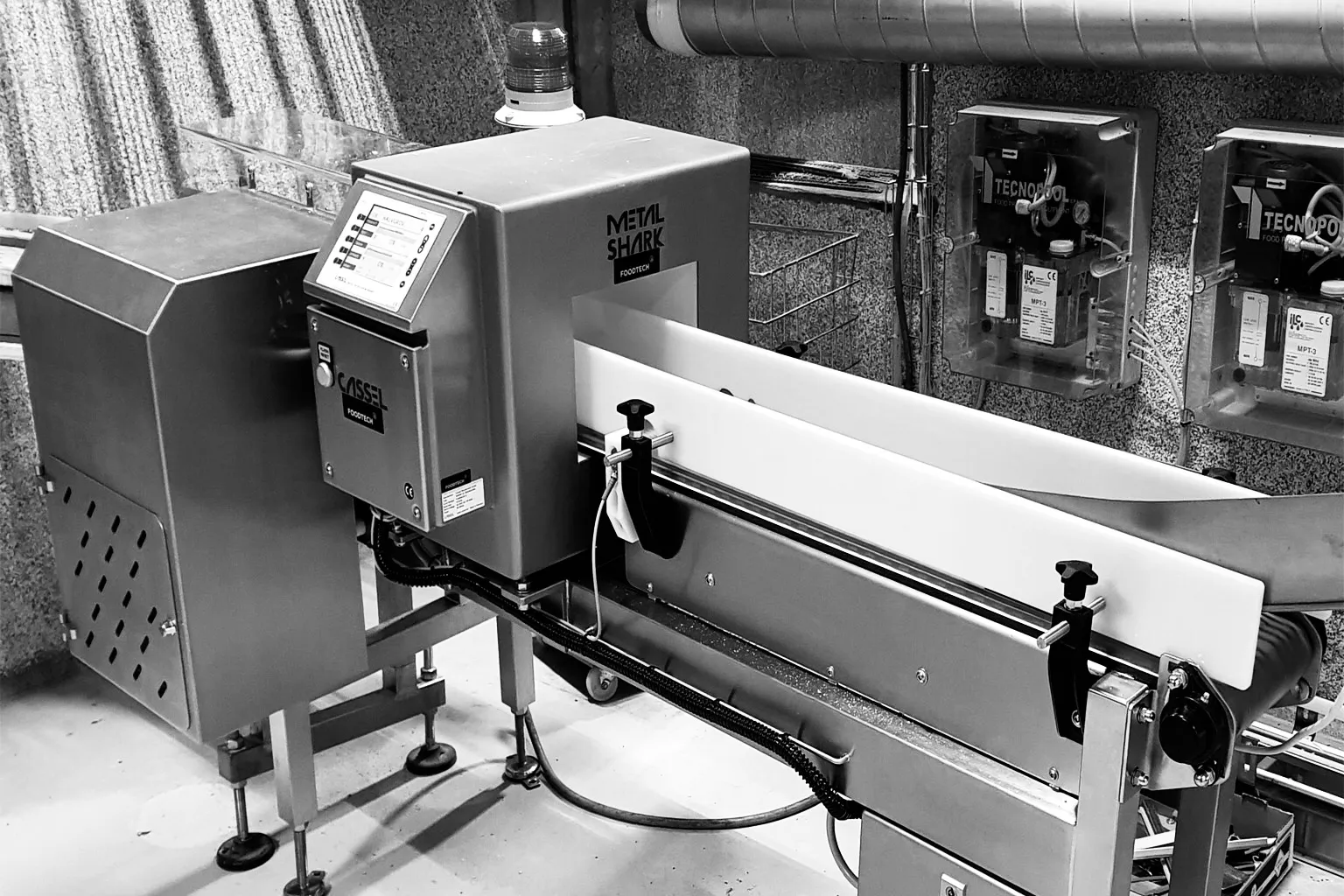
- Metal detection systems are used to identify metal contaminants in products, particularly in the food and pharmaceutical industries.
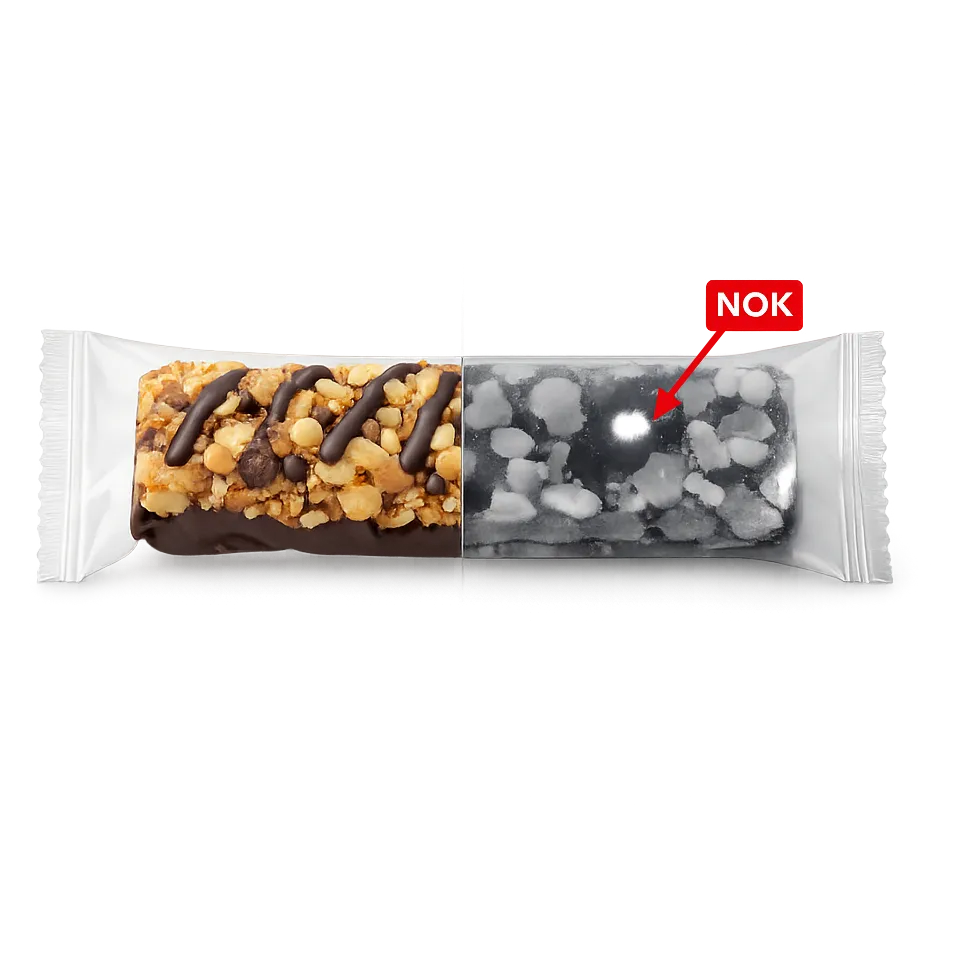
- X-ray systems enable the detection of foreign objects as well as the analysis of a product’s internal structure, including density variations or missing components.
- Industrial vision systemscheck for visual aspects such as the presence of components, positioning, labels, codes, or surface defects.
- Checkweighers monitor the weight of products on the production line, identifying deviations from set values or incomplete products.
- Dimensional inspection systems measure the dimensions, positions, or tolerances of parts, ensuring that they comply with technical specifications.
- Statistical Process Control (SPC) systems collect and analyze data from the production process, helping to identify deviations and prevent defects before they occur.
The type of defects that need to be identified, along with the actual production conditions, determine the choice of inspection system and how it must be configured to function properly.
Quality control applications
Testing for contaminants in packaged products
Detection of foreign objects in food products.
Checking product presence and integrity
Check that the package is sealed and that all components are present.
Checking labels and codes
Verifying the accuracy of the label and the readability of the barcodes.
Detection of visual or structural defects
Identifying scratches, dents, and discoloration.
Product weight control
Verification of dimensions and tolerances
Manual verification vs. automated inspection
Manual verification depends on the operator and varies depending on attention, fatigue, and work pace. In high-volume processes, variability becomes a real risk, and many aspects cannot be verified manually.
Automated inspection ensures consistency and repeatability. The systems inspect each product under the same conditions, without variation, and can operate continuously across multiple shifts.
Traceability and defect prevention
This information enables the rapid identification of process issues and the prevention of recurring defects. In many industries, traceability is a mandatory requirement, not just an option.Quality control thus becomes a tool for continuous improvement, not just a final filter.
Integration into existing workflows
Inspection systems are designed to be integrated directly into existing production lines without major modifications. In most cases, they are positioned on conveyors or at key points in the production flow.
Proper integration depends on positioning, synchronization with the line, and how rejected products are handled. A well-integrated system operates without disrupting the production pace.
The cost of inspection systems
The cost is not determined solely by the equipment, but by the impact on the process. The investment must be evaluated in relation to the risks it helps avoid: non-conforming products, complaints, recalls, or production losses.
In many cases, cost savings result from mitigating these risks and stabilizing the process. Inspection systems are particularly essential in applications where a defect can lead to significant costs.
Talk to a specialist
Would you like to discuss a specific application? Our team can help you choose the right solution, tailored to your production process and your goals.