
Stable and well-defined production processes
We automate repetitive manufacturing operations, reducing process variations, cycle times, and reliance on operators through flexible solutions that integrate collaborative robots directly into existing workflows.

Contents
- What is a collaborative robot?
- The Benefits of Collaborative Robots
- Cobots vs. Traditional Industrial Robots
- Industrial Applications for Cobots
- Programming the cobots
- Universal Robots Authorized Training Center (ATC)
- Safety in Collaborative Robot Applications
- Integrating cobots into existing work processes
- The cost of a collaborative robot
- Contact us
- FAQ

What is a collaborative robot?
A collaborative robot, or cobot, is an industrial robot designed to work alongside human operators in the same workspace.
Robots are used to automate repetitive, demanding, or difficult-to-maintain operations. Typical examples of applications:
- palletizing and depalletizing
- product handling
- CNC machine operation
- welding, assembly, finishing
- inspection and visual check
The role of robots is to take over repetitive tasks and stabilize processes where consistency and a steady pace are critical.
The Benefits of Collaborative Robots
The popularity of collaborative robots has grown rapidly because they address real challenges in manufacturing: labor shortages, fluctuations in production volume, and the pressure to improve efficiency.
The main advantages of coboats are:
- quick installation compared to traditional industrial robots
- simplified programming, no advanced robotics experience required
- high flexibility for product changes
- the ability to switch between multiple processes
- high consistency in repetitive tasks
A cobot does not turn a factory into a fully automated system. In most cases, it acts as an extension of the operator, stabilizing the process and reducing variability.
Cobots vs. Traditional Industrial Robots
Collaborative robots and industrial robots serve different purposes and do not offer the same level of flexibility. In practice, collaborative robots are preferred in applications where rapid integration and adaptation to changes are essential.
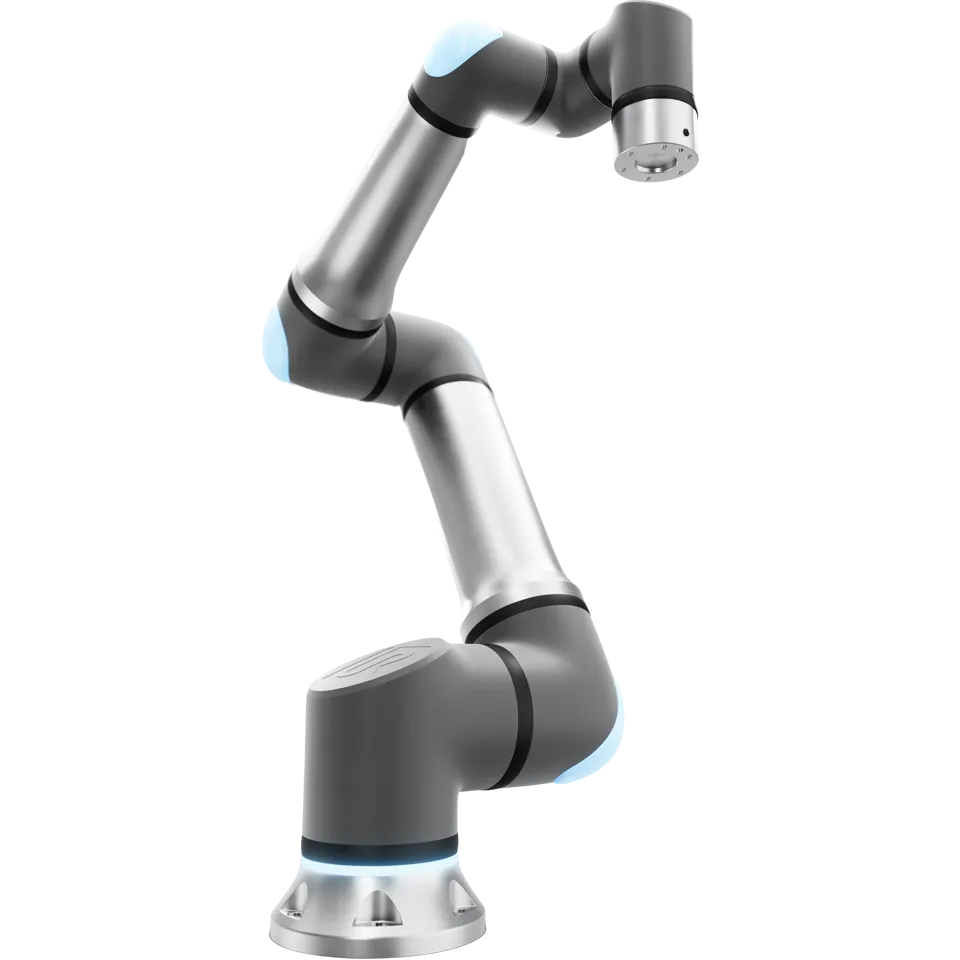
Robots are generally used in applications where rapid adaptation to the process and working alongside operators are more important.
- repetitive or monotonous tasks
- production involving frequent product changes
- applications where the operator and the robot work in the same area in complete safety
- Complex automation is not justified
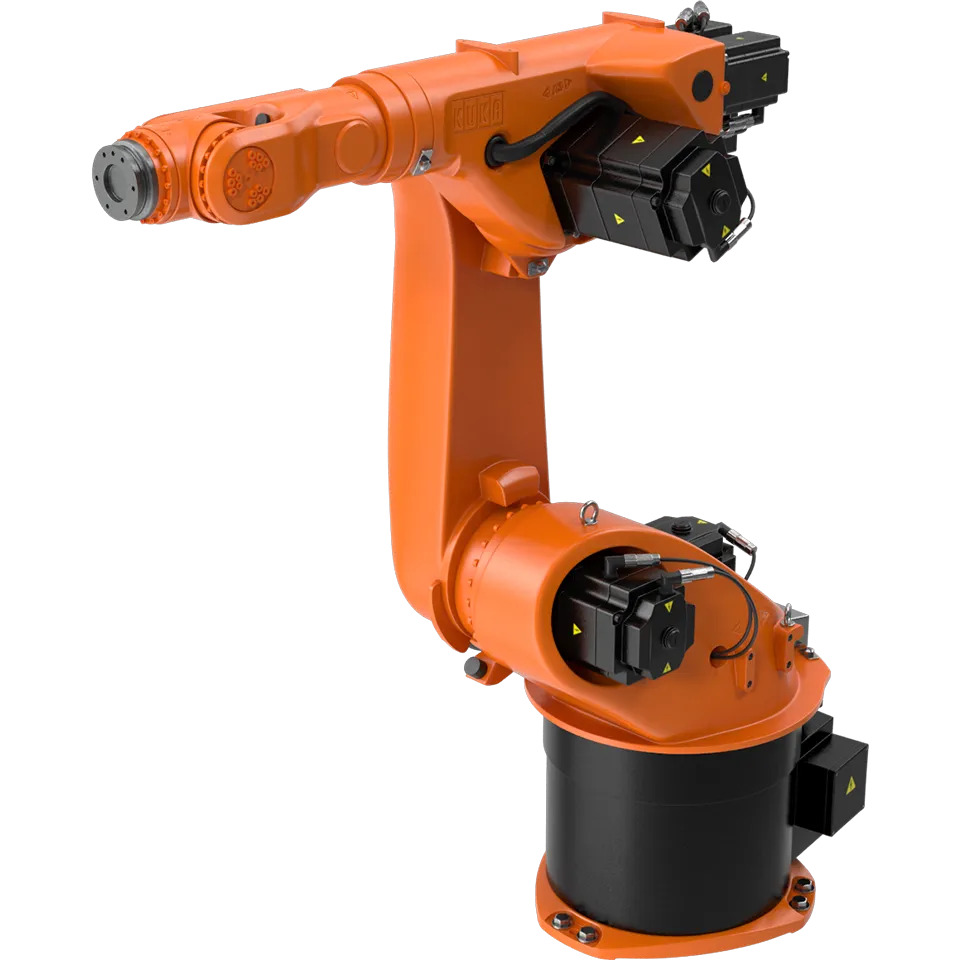
Traditional industrial robots are used in processes where speed and handling capacity are the top priorities, but they require more complex programming.
- high-speed operations on automated lines
- handling heavy loads
- applications where the robot operates in a separate cell, with strict operating rules
- stable processes with high production volumes
The choice isn't just about technology, but about the nature of the work. Rigid, well-defined operations can be automated using traditional systems, but most manufacturing applications require flexibility and rapid adaptation.
Industrial Applications for Cobots
Palletizing
Manipulation
CNC Machining
Welding
Assembly
Finishing
Dosage
Vision
Programming the cobots
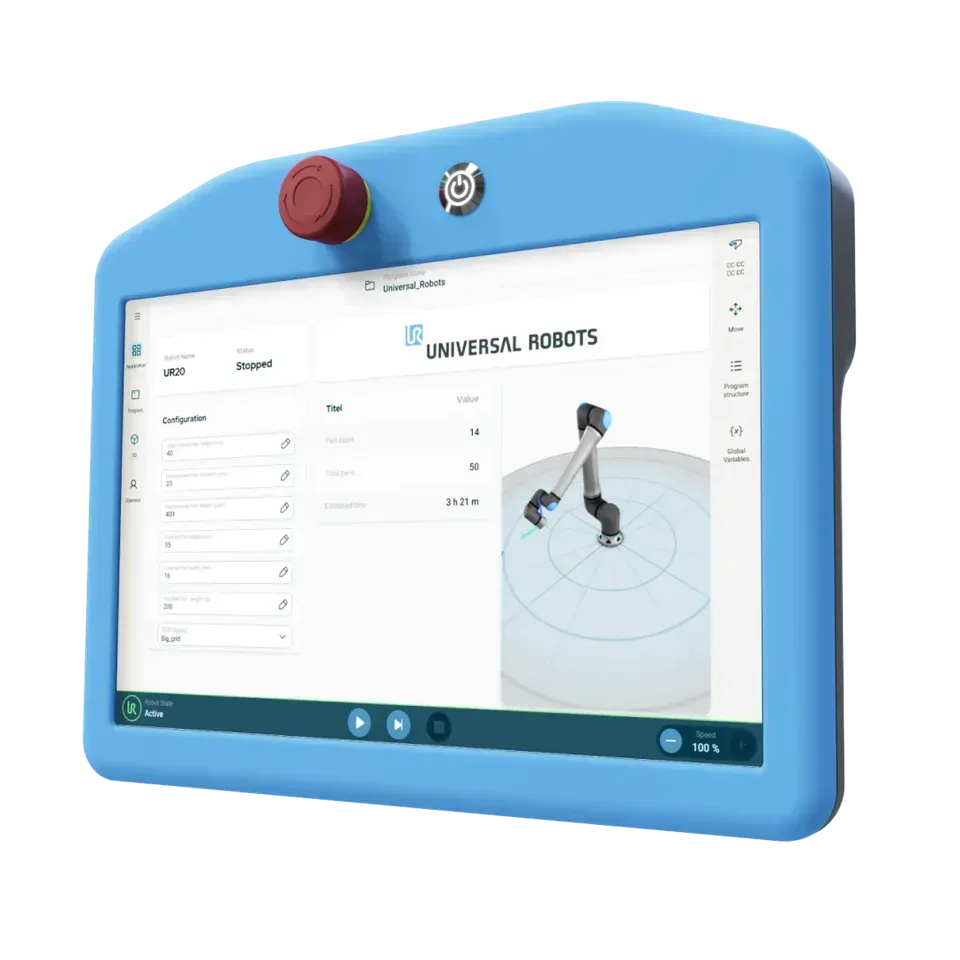
PolyScope X is the next generation of programming software for Universal Robots.
The interface is designed for intuitive use and allows for quick application configuration through logical, visual steps. Programming is carried out using clear block-based structures, and the operator can quickly define the robot’s movements directly from the interface or via manual guidance.
- Modern, user-friendly touchscreen interface
- Simple visual programming, no coding knowledge required
- Easy integration with other equipment
- Rapid application development with URCaps
- Easy navigation between scheduling and monitoring
The interface simplifies the programming process, significantly reduces the learning curve, and enables rapid adaptation to changes in products, processes, or production line configurations.
Universal Robots Authorized Training Center (ATC)
For companies and individuals looking to develop their skills, we offer specialized training programs. At theUniversal Robots Authorized Training Center (ATC) inBrașov, we organize official courses for both beginners and specialists seeking to deepen their knowledge of programming and integrating robotic applications.
Safety in Collaborative Robot Applications
Safety is what sets collaborative robots apart from traditional robotic systems. Cobots are designed to operate in close proximity to operators and include built-in features that limit force and monitor contact during movement.
If the robot encounters unexpected resistance or comes into contact with an object, its movement is automatically stopped to reduce the risk of injury or equipment damage.
However, the idea that a cobot can be installed anywhere without a risk assessment is mistaken. In practice, each application must be evaluated based on the actual working context and how the robot interacts with operators and the surrounding environment. Parameters such as the robot’s speed, the mass being handled, the geometry of the movement, and the operator’s proximity directly influence the application’s safety level.
True safety depends on how the application is designed, on risk analysis, and on the proper integration of the robot into the workflow.
Integrating cobots into existing work processes
One of the main advantages of collaborative robots is their easy integration into existing processes.
In many cases, the cobot can be installed next to an existing machine, on a workbench, or on a mobile system, without requiring major changes to the production infrastructure. This flexibility allows for the gradual automation of processes and the adaptation of the solution to actual operational needs. However, successful integration depends on process stability, part repeatability, and how products are fed into and removed from the work area.
Automation works best when the process is already well-defined and controlled, and the robot is integrated as part of a clearly established workflow.
The cost of a collaborative robot
The cost of a cobot is not limited to the robot itself. A complete application includes several components that work together to form a functional solution. These include the collaborative robot, the gripper or tool mounted on the robot, mechanical integration into the workspace, application programming, and the safety systems required for proper operation.
In many cases, the investment is justified by clear operational benefits. Automation can reduce cycle times, stabilize processes that rely on repetitive tasks, and eliminate tedious manual tasks for operators. Additionally, a robot can operate continuously across multiple shifts, helping to maintain a predictable production pace.
The true cost of automation is not determined solely by the price of the robot, but by how the application is designed and used in the production process.
The return on investment depends largely on choosing the right application and properly integrating the system into the existing workflow, not just on the cost of the equipment.
Talk to a specialist
Would you like to discuss a specific application? Our team can help you choose the right solution, tailored to your production process and your goals.
FAQ
When is it really worth automating with a cobot?
How do I identify the right application for a cobot?
What kinds of processes are typically too complex for a cobot?
What level of training is required for operators?
How often does a cobot's program need to be updated in production?
How are part variations or tolerances managed?
Depending on the application, variations can be managed through mechanical positioning, guidance systems, sensors, or vision cameras.